
See which applications your university can retire
Link each application to the Higher Education Reference Models (HERM). Colloquial then shows where your university pays twice for the same capability.
Free for 14 days. No credit card required.
A 2026 Showcase Partner of CAUDIT, the Council of Australasian University Directors of Information Technology
 FactsViewsInsights

ViewsBusiness
Business Capability Model
A Business Capability Model (BCM) outlines an organisation’s core functions and processes, aligning them with strategic goals. It identifies key capabilities needed for success and guides resource allocation.
Capability group
Learning and Teaching
Curriculum Management
Student Recruitment
3 applications
- Central student CRM
- Faculty CRM
- Enquiries portal
Student Admission
Student Management
Why universities pay twice for the same capability
Faculties, research centres and central IT often buy applications on their own. Over time, several applications end up doing the same job. Without one view of the portfolio, nobody can safely retire any of them.
Colloquial shows every application on one HERM capability map. When two applications support the same capability, you see it straight away.
Capability group
Learning and Teaching
Student Recruitment
Applications: 3
- Central student CRMInvest
- Faculty CRMMigrate
- Enquiries portalEliminate
- 2 applications to retire
What changes with one view of the portfolio
Find duplicate applications. See every application that supports the same HERM capability, side by side.
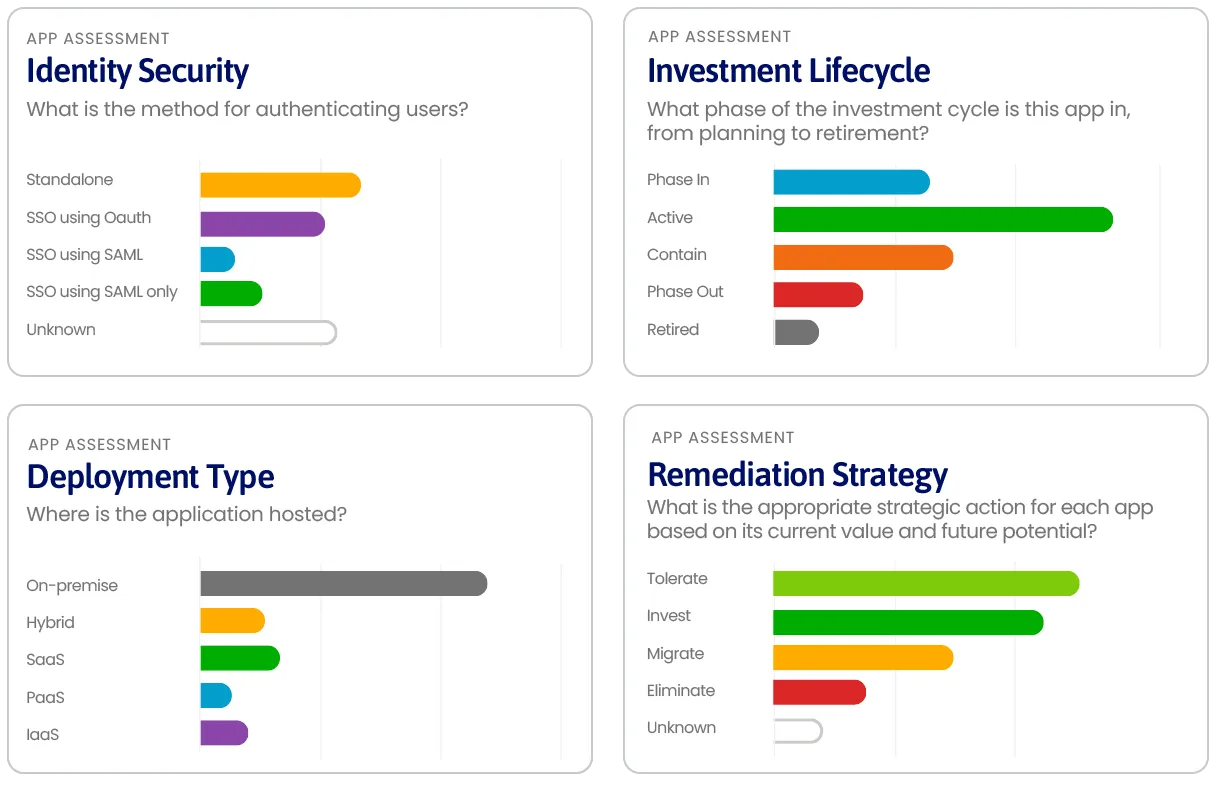
Retire applications with evidence. Rate each application with Gartner's TIME model: tolerate, invest, migrate or eliminate.
Start from a model your peers use. Tailor HERM to your university. Colloquial shows which parts you changed.
Keep the portfolio current. Sync applications from your ServiceNow CMDB, so the list stays current after the review.
Fewer applications doing the same job. More budget for learning and research.
How it works
- Step 1
Start from HERM.
Use HERM's Business Reference Model as your first capability map.
- Step 2
Add your applications.
Sync them from ServiceNow, or add each one as a Fact Card.
- Step 3
Link and decide.
Link each application to its capabilities. Then rate it with TIME.
A 2026 CAUDIT Showcase Partner
Our 2026 Showcase for CAUDIT member institutions is about getting more value from your application portfolio. Members can find the session on the CAUDIT website.
Frequently asked questions
What is application portfolio management in higher education?
Application portfolio management keeps a current list of the applications a university runs.
For each application, it records the capabilities it supports, what it costs and how well it fits.
With that list, IT can decide what to keep, consolidate or retire.
Do we have to use HERM?
No. You can configure Colloquial to reflect your own architecture and operating model.
If you start from HERM, you can rename or add groups. Colloquial shows which parts still follow HERM.
Can Colloquial sync applications from ServiceNow?
Yes. Colloquial syncs CMDB entities from ServiceNow, so your application records stay up to date.
What is the Gartner TIME model?
TIME sorts each application into one of four actions: tolerate, invest, migrate or eliminate.
Colloquial shows the result for the whole portfolio, so you can plan what to consolidate and what to retire.
How long is the free trial?
The free trial lasts 14 days. You don’t need a credit card.
If you cancel during the trial, you aren’t charged.
Is Colloquial a CAUDIT partner?
Yes. Colloquial is a 2026 CAUDIT Showcase Partner.
CAUDIT members can find our Showcase on the CAUDIT website.
Where is our data hosted?
Colloquial hosts your data in Australia.
See which applications your university can retire
Free for 14 days. No credit card required. If you cancel during the trial, you aren’t charged.
Start free trial